
Sanctuary
finding refuge in a violent world

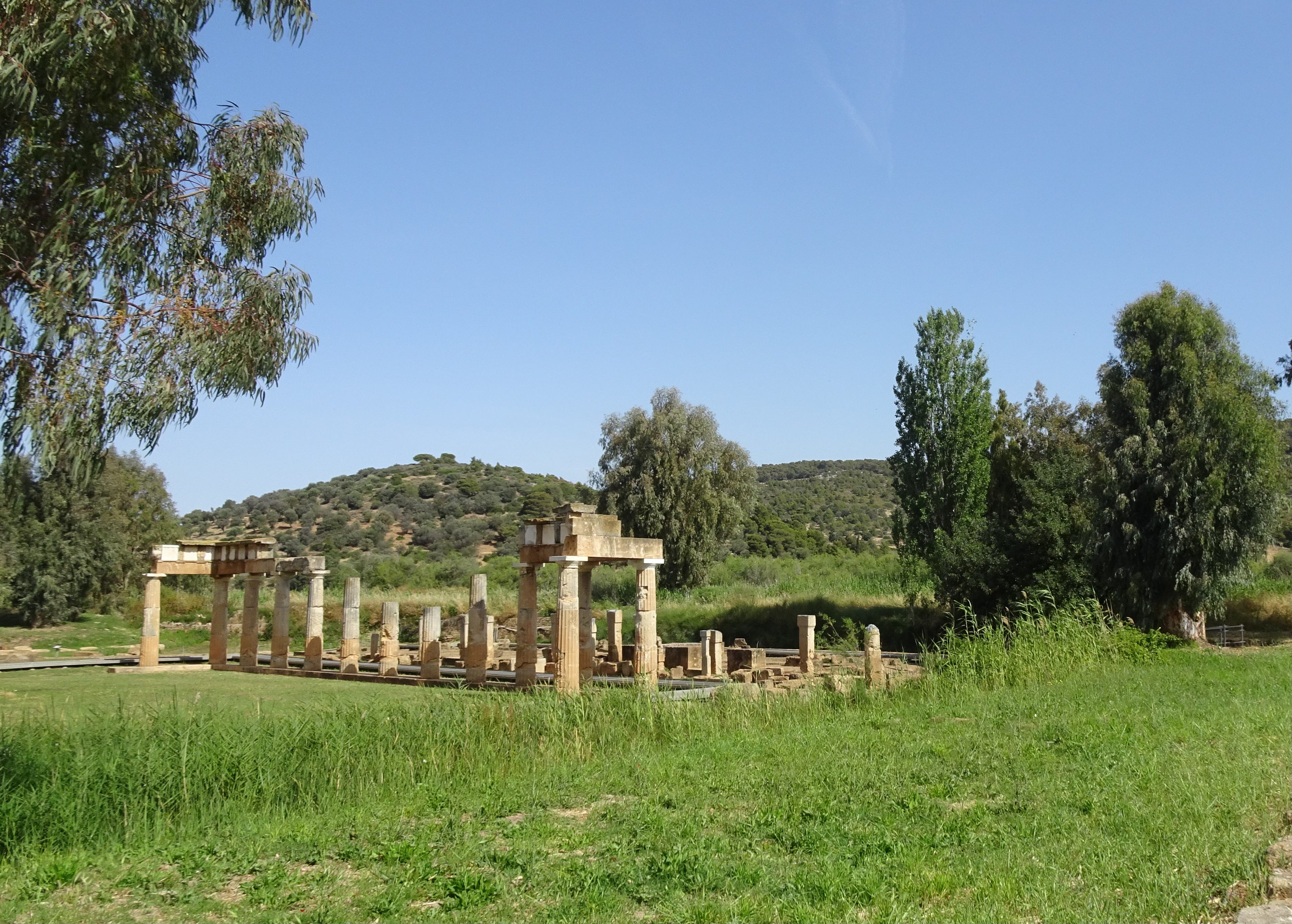
Temple of Artemis, Vravrona, Attica
There is an ancient temple I go to when I feel overwhelmed by all that’s happening around me, when I need to hold the world at a distance for a while. Archaeological sites, the more remote ones, can be especially peaceful, even if their history is often one marked by violence and tragedy, as they seem to exist outside time, shielded to some degree from the outside world.
The ancient sanctuary of Artemis in Vravrona, Attica, is a particularly peaceful place. It stands, quite unassumingly, on the soft earth of a wetland, tucked away behind reeds and eucalyptus trees. As it isn’t one of the more popular archaeological sites in Attica, it is not unusual to be the only visitor, sharing the space with only the birds and butterflies that claim it as their temporary home.
Perhaps its peaceful energy stems in part from its history, as it was not erected to mark military superiority, or other achievements associated with power, but to honour Artemis, the protectress of wild animals and children1, especially young girls. In ancient times, girls of various ages would come to the temple to participate in the Arkteia, a rite of passage marking the end of childhood, from arktos, meaning bear. According to the sanctuary’s origin myth, after two men killed a bear sacred to the goddess, she responded by sending a plague, demanding that the citizens of the city consecrate their female children to her. Dressed as bear cubs, they would dance around the temple, carrying baskets of figs, honouring the ‘great she-bear’ goddess and the animals she protected. The cabinets in the small museum on the site are filled with the votive offerings children brought for her, toys made of bone or clay, combs and mirrors. There are no arrowheads, no spears, or shields, nothing recalling our long history of violence.
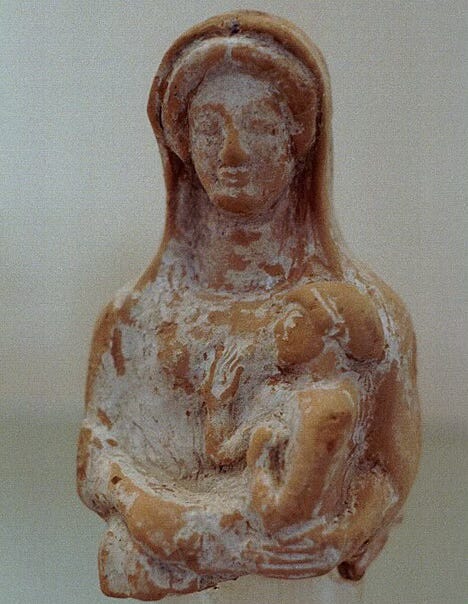
Artemis ‘Kourotrophos’ holding a young child, Archaeological Museum of Vravrona
But yesterday, as I sat in the grass under the shade of a eucalyptus tree watching sparrows and butterflies fly around the ancient columns, it was impossible to stop the real world from intruding. The sense of peace I felt was bittersweet, as I thought of all those who have no recourse to safe spaces, of the women who live in constant fear of violence even from those they share their lives with, of the countless children who have to suffer the consequences of war, of the animals and habitats destroyed as a result of human greed.
I realized, more than ever before, how privileged I am to live in relative safety. As a survivor of sexual assault, I am no stranger to violence, but for me it was an exception, not a norm I have to live with day after day. As gender-based violence increases all over the world, as innocent people, even children, are persecuted, bombed and starved, as the earth’s wild spaces are ravaged and devastated, it is impossible not to feel that the notion of sanctuary, with its connotations of safety, of refuge, is becoming more and more remote, as it becomes ever more necessary.
Perhaps we need to reassess our goals as a species, dare to consider the possibility that we got it wrong and that the progress we assume we have made means little, if anything at all, if nothing is sacred anymore, not even the lives of children.
As I sat by the temple, I thought of Artemis and of the plague she sent to those who killed her sacred bear; of how a world where the powerful have nothing to fear is a very dangerous place. But just as I got up to leave, a group of young school children came running along the path leading to the temple, just as I imagine they would have done two thousand years ago. Within seconds they were on the grounds, filling the space with laughter and pure joy. I shut my eyes and let the sound fill my heart and mind and for a few precious moments, I felt a deep sense of peace. If only I could have shared it with all those who have no recourse to it. If only there were more spaces in the world where those who need sanctuary could find it.
Artemis was known as a kourotrophos, a child-nurturing goddess.